Record Shop
Sell in our store in Amsterdam Noord or via our Bandcamp network.
VINTAGE · EXCLUSIVES







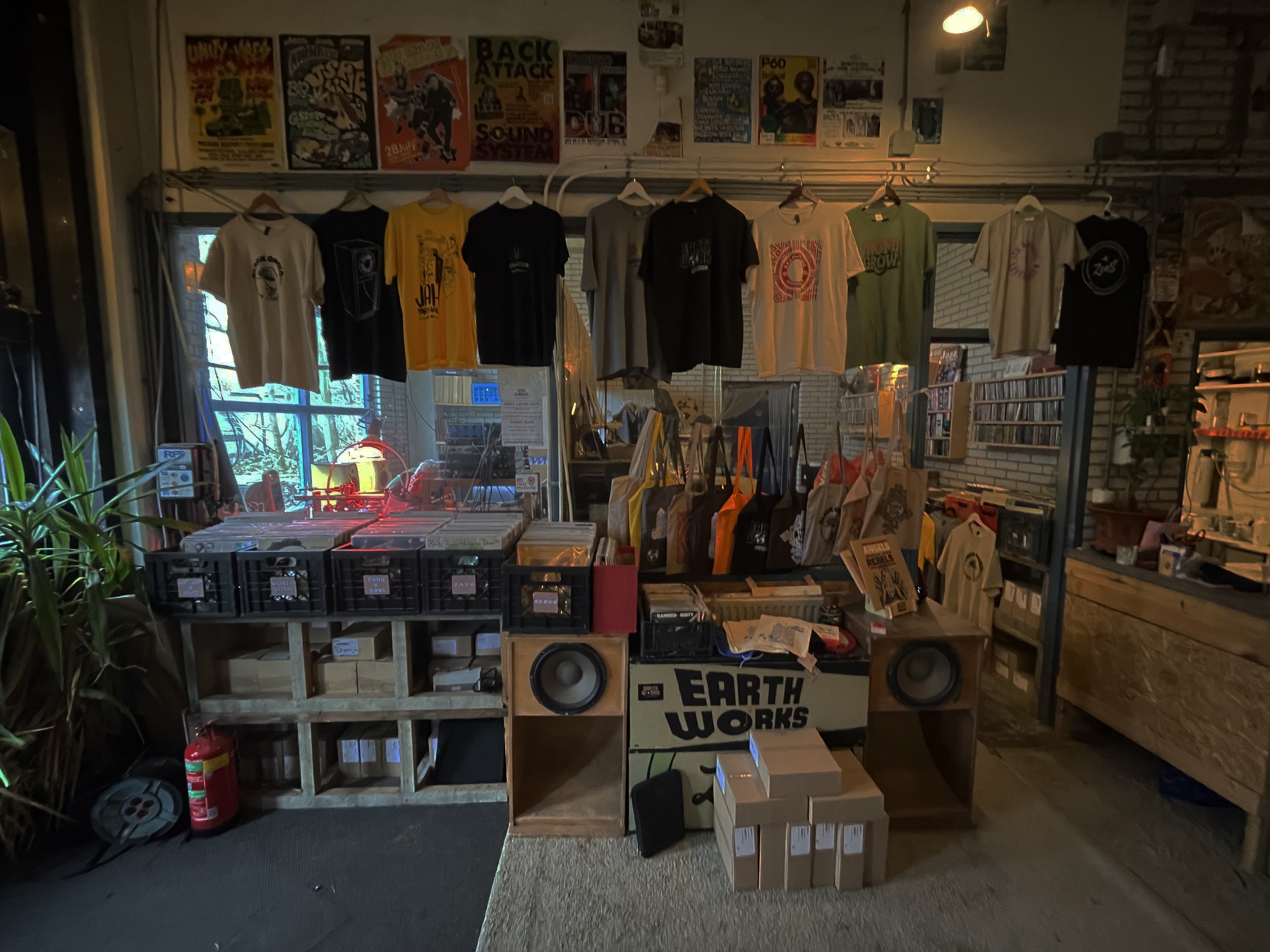
Outernational Roots Community… Record shop, music studio, vinyl manufacturing & distribution, located in Amsterdam Noord.
Music
Check out the latest releases on our network.
Featured this week
The full catalogue, digital & vinyl ↗︎
Check out some of the items in our store ↗︎
Selections & Playlists ↗︎
 Merch packs & special items ↗︎
Distribution
The music we present is like a family tree of collaborating independent artists, producers, bands and labels who make music from the heart. Contact us if you have a project that you think we can help with.
Sell in our store in Amsterdam Noord or via our Bandcamp network.
VINTAGE · EXCLUSIVESWe cut records in-house. Bio-vinyl custom cuts made to order.
LATHE · DUBPLATESolar-powered vintage live recording & mixing studio for the bits that can't be done at home.
LIVE · MIXINGMastering, Manufacturing, Vinyl & Digital sales & distribution, Shipping
LABEL · DISTROThe Space
On the inside
Documentary
Bertha is our mascot — she has a long history, part of our music journey for over 35 years, and she still influences everything we do in the studio today.
A documentary about the Ampex MM‑1000 — a legendary, iconic machine. And a tribute to our friend Rej.
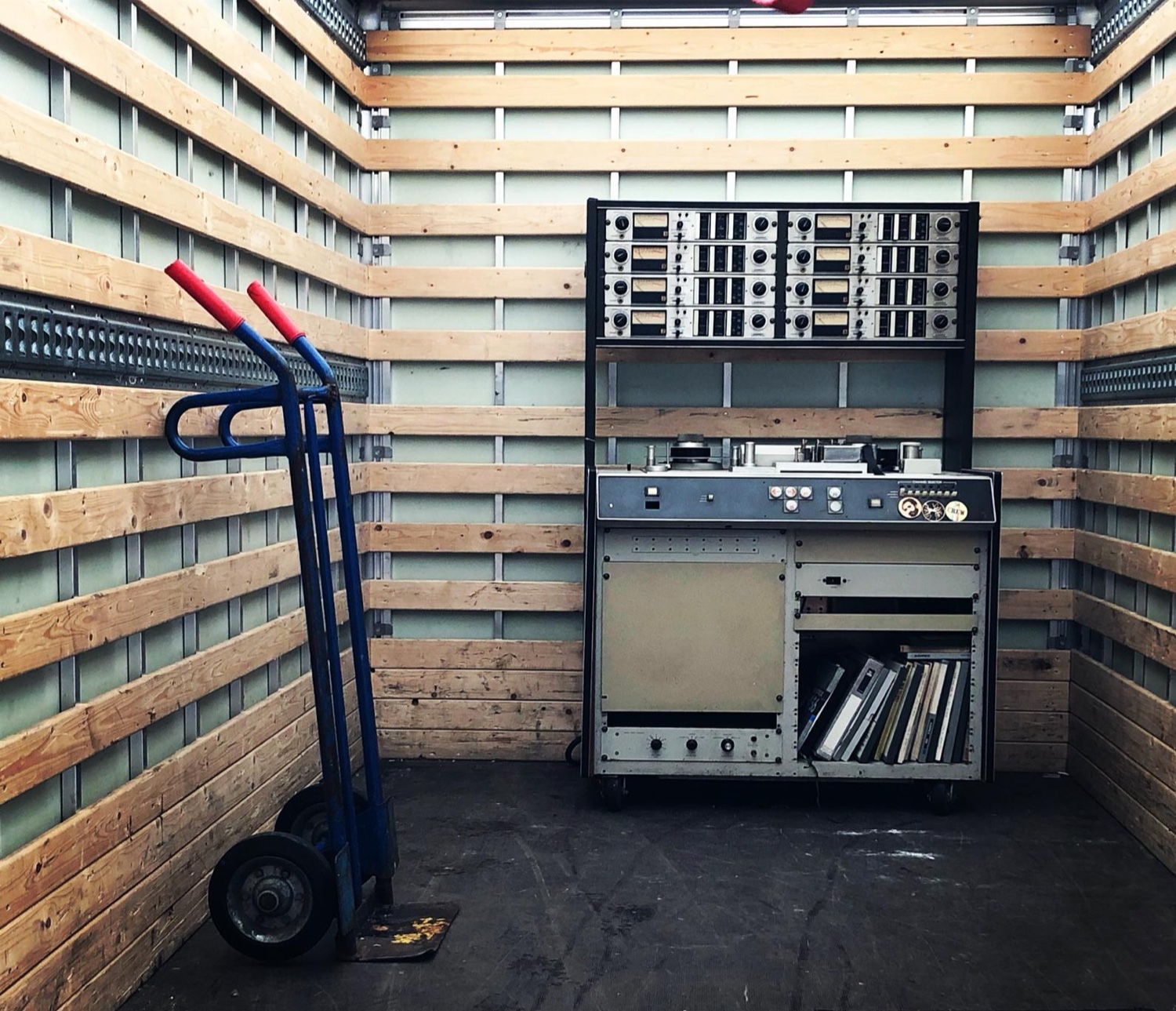
The machine you see here is Bertha — an Ampex MM‑1000, one of the great analog multitrack tape recorders ever built, and one of the machines that changed how music is made. She lives in our studio. That's why she matters to us, and that's why we made this film.
It's a love letter to our friend Rej, and to the analog era — a time when making a record meant gathering in a room and needing each other. Tape hiss, warm iron, human hands, community. That's the era we love, and the one we keep alive.
 Bertha is a piece of recording history — the Ampex MM‑1000 is the lead image on Wikipedia's history of multitrack recording ↗︎


Livication
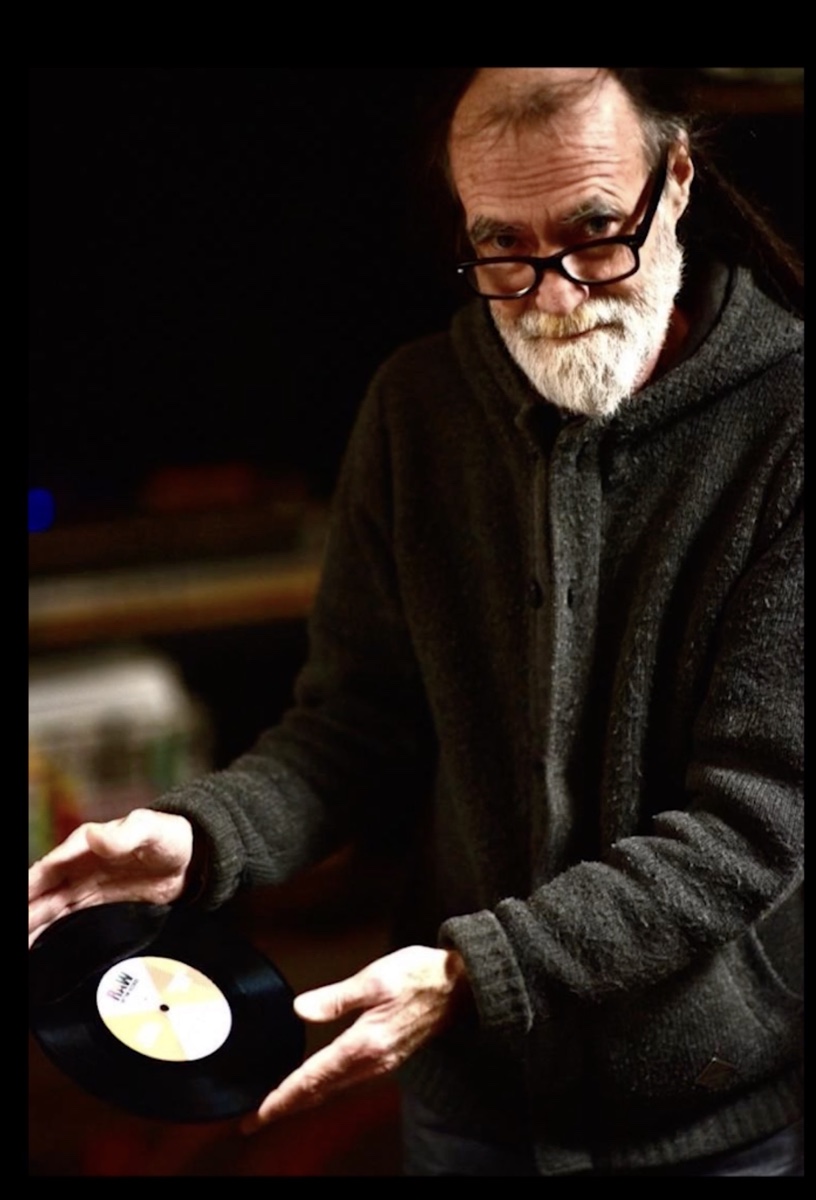
Jah Rej — producer, engineer and mixer, and founder of Jah Works Records. He brought Bertha home in the late 1980s, kept her alive, and made that big warm sound for more than three decades. Bertha is his Ampex MM‑1000: an 8‑track, one‑inch multitrack tape recorder, built to make the very best sound a machine could.
This film was made with him, and for him — the story of getting the old girl running again, in his own words. It is livicated to Rej. Ever remembered.
A film by Xchematic · Directed by Carlos Mats · Produced by Ben King for Earth Works Amsterdam.
The Story
Bertha is an Ampex MM‑1000 — eight tracks laid across a full inch of tape. And that's the whole point: where later machines crammed sixteen or twenty‑four tracks across the same tape, she spreads only eight — so every track gets far more tape to print its signal on. More tape per track means more detail, more dynamics, and that big, warm, fatter sound digital can't really touch. As Rej put it, it's the difference between a photograph and a newspaper picture made of dots — this is continuous tone. They were the ultimate in sound recording; that's why they were built. She lives in our studio in Amsterdam Noord, and this film is the story of getting her running again — in Rej's own words.
Tape & Tracks
As Rej explains it: you start with quarter‑inch tape for two tracks, then half‑inch for four, eight tracks across one inch, sixteen across two‑inch — and then twenty‑four across that same two‑inch. The more tracks you squeeze onto the tape, the less tape each track gets, and the quality starts to give. Slide through the formats.
Rej, in his own words
I'm going to introduce you to my old lady. I'm hoping that she's still going to be running, you know. This is Bertha. She's an Ampex, eight‑track, one‑inch multitrack tape recorder.
Probably represents some of the best sound quality that you'd be able to record. They were just done to make the very best sound recording you could, with the equipment available, you know.
You can still hear the difference in the sound, because it's coming from here. It's bigger, it's warmer, fatter. There's a lot of argument about it, but digital can't really touch this.
It's like the difference between a picture in a newspaper and a photograph. The picture in the newspaper looks like a photograph, but it's made of dots — so there's holes in between. This is continuous tone.
I mean, she's not been used now for about seven years. Mainly 'cause I didn't have the space to have the old girl operational. So it's nice that this space has come available. Got her out and cleaned up so far — ready for testing with some tape, and hope that she still rolls and all the needles still rock about, you know. Hopefully we'll have her up and running and making that big, warm sound again. Yeah, looking forward to it.
She's a heavyweight piece of gear, and you need four quite strong people to lift this onto a truck. Even the power supply. So it's a weighty thing — the motor in that machine could take your arm off easily, you know. This is a big machine, it's powerful. When you get the capstan going, you'll know it, you'll hear it. It's like an airplane taking off. So it's difficult to have the machine in the same room as the artist, because it is quite loud.
Every now and again you'll see little lines of chalk going past on the tape. Well, that's the only way you could tell where a track began. You'd actually mark the tape with white chalk. That was the beginning of a track.
When I first got her, I brought her down from Reading on the back of a flatbed truck. So it was lucky that it wasn't raining that day! See, this tape is old, and as such it's kind of sticky. That's why you have to kind of roll them, one side to the other, to unstick the tape.
And the original owner was a man called Rod Argent. He had a band called “Argent”, and had quite a big hit record — a tune called “Hold Your Head Up”. So quite likely recorded on this here machine. You smell that old tape smell. I'm hoping that this will loosen it up.
After that, she was with a man called Martin Campbell, a reggae producer — Channel One UK. I used to use her when I used to use the studio there in the early days, and liked her so much that I bought her.
Again, you'll see a little set of white marks go flying past. These machines — using one inch for eight tracks. So you start off with quarter inch for two tracks, then half inch for four tracks, and then they put eight tracks across one inch, and sixteen tracks across two‑inch, which is the same format. After that, going to three‑inch tape was kind of ridiculous, so they put twenty‑four across two‑inch — so really you're reducing the quality then, because you're putting more tracks across the same amount of tape. So really, these machines are the ultimate in sound recording. That's why they were built.
On this machine, you can't just press stop. You have to kind of put the brakes on first. The way these things work is that the faster the tape runs, the higher quality and bigger definition and sound dynamic you get, because you're using more tape to print that piece of signal.
The capstan is now running. The problem now is that the tape is so old that it's a bit sticky still. So what I'm going to do is forward and reverse the tape a few times, so it gets some air between the layers. So this one runs at seven‑and‑a‑half and fifteen IPS — fifteen being pretty much industry standard. But you can get machines that run at thirty IPS, for even higher quality. Some mastering machines would run at thirty IPS, but it makes it very expensive on the tape. Even at fifteen IPS, you'd get maybe five songs on a roll of tape. I don't know what that costs now, but back in the day it was about fifteen pounds for a roll of tape. But you know, this — this is quality, and you pay for quality.
But she's already rolling a bit better. Yeah, baby! She's been in a garage for five years. She's going to be a bit stiff, you know what I mean?
What The Film Tells
At the dawn of multitrack recording, manufacturers competed to create the best quality sound recording machine possible.
AMPEX stood out as a high‑end manufacturer of sound equipment and components.
In 1967, AMPEX released the revolutionary “MM‑1000” Multitrack Tape Recorder.
With 8 or 16 dedicated tracks, artists finally had the opportunity to record the separate parts of a song — and then apply novel mixing techniques.
Rej started to record on Bertha in the late 1980's. She has been a big part of our musical family for over 35 years. We named ours, Bertha.
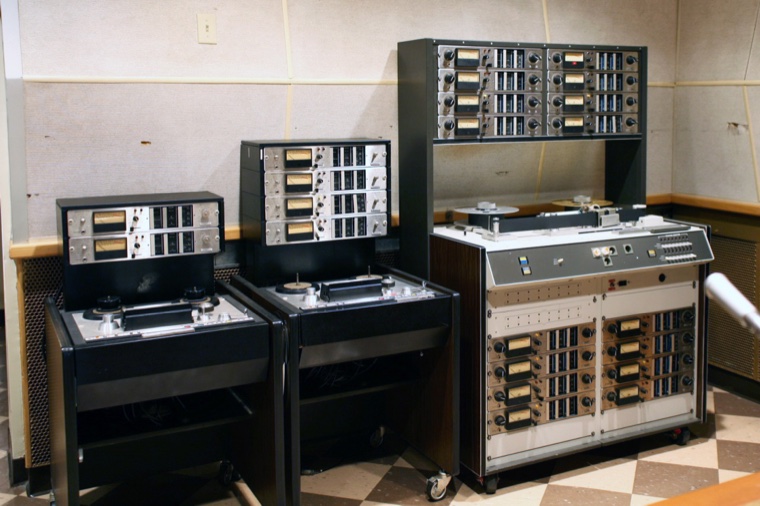
Bertha is a piece of recording history. The Ampex MM‑1000 is literally the lead image on Wikipedia's article on the history of multitrack recording — the same model that sits in our studio.
“The combination of the ability to edit via tape splicing, and the ability to record multiple tracks, revolutionized studio recording.”
Ampex introduced the 16‑track MM‑1000, “the first commercially available 16‑track machine,” widely adopted by major studios at the turn of the 1970s.Read it on Wikipedia ↗︎
Vinyl
The record keeps climbing. Vinyl has grown every single year since 2006 — a worldwide revival that's now one of the fastest-growing formats in music, outselling the CD. That's the world Earth Works lives in: we cut it, we press it, we spin it.

On Rotation

A selection of tunes from the studio crew.
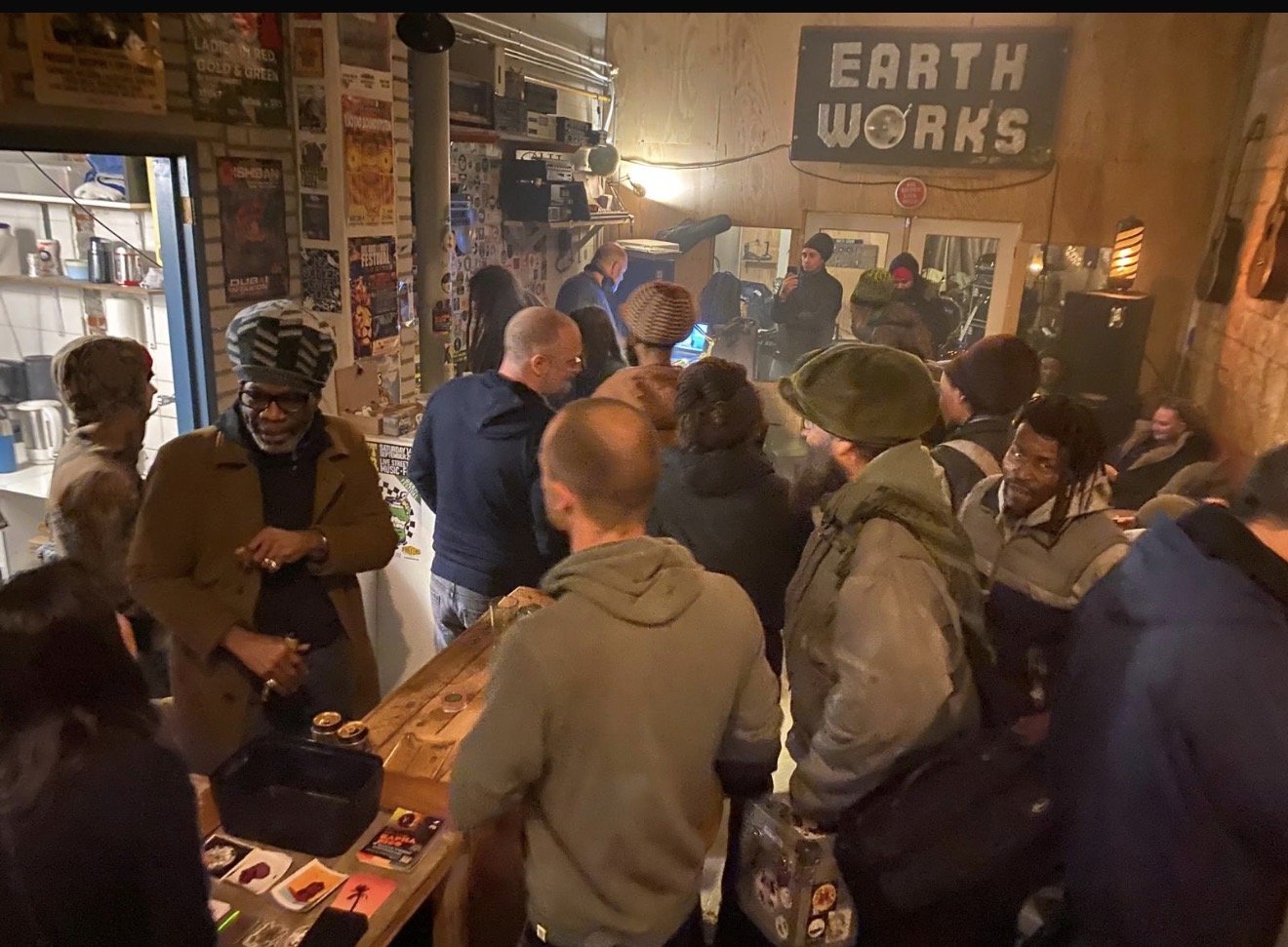
The Crew
Selectors, musicians, friends and family — giving highest thanks to all earthworkers everywhere who have helped grow the studio along the way.
Life

Cuts, sessions and slices of life from the studio at Het Groene Veld. The whole feed lives on Instagram ↗︎.


Coming soon
Hand‑picked music grab‑bags from Artists, labels and the studio. Records, merch and studio one‑offs; you never know exactly what’s inside our music ‘Grab‑Bag’ — click here to check out the latest, or subscribe to receive a monthly drop!
Hover to open ↑︎
Represent the crew!
Share your unboxing on social and get 10% off your next purchase.
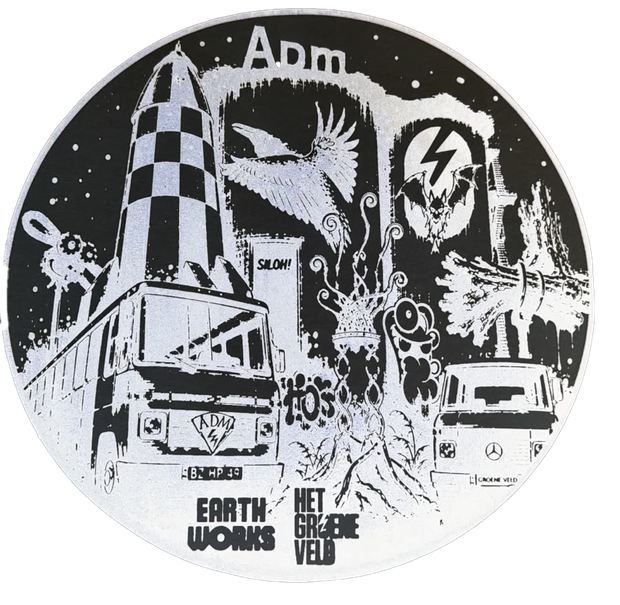
The Green Field
We're part of a beautiful community of artists and builders at Het Groene Veld — The Green Field — in Amsterdam Noord. They've given us a home, and we welcome you in.
Find Us
Earth Works is at Het Groene Veld in Amsterdam Noord — hop the free GVB ferry behind Centraal and you're here in minutes.

Scan with your phone's camera to open the location in Google Maps.
Our Ethos
Sound was the first language, older than words
Earth Works' mission is to help independent music reach the right ears and find its community.
Questions
At Het Groene Veld in Amsterdam Noord — a few minutes across the IJ from Centraal on the free GVB ferry. 15 minutes on bicycle or 10 min walk from Metro Noord.
Yes — come hang out! We're around during working hours, 11am–7pm.
A record shop (vintage records & label exclusives), in-house record cutting, live recording and live mixing, and label & distribution services for independent artists.


Credits
I'm Carlos Mats, an artist, technologist and designer based in Mexico City and San Francisco, originally from Honduras. My companies are Xchematic, an arts and technology studio, and IKA, a frontier innovation lab. I first came to this studio twelve years ago, and it gave me a home — I'm eternally grateful to Ben and to Earth Works.
This site is designed, built and shot by me. I also made the documentary Rej & Bertha, produced by Ben King, as a tribute to our friend Rej Forte.
